Daily Driven1962W198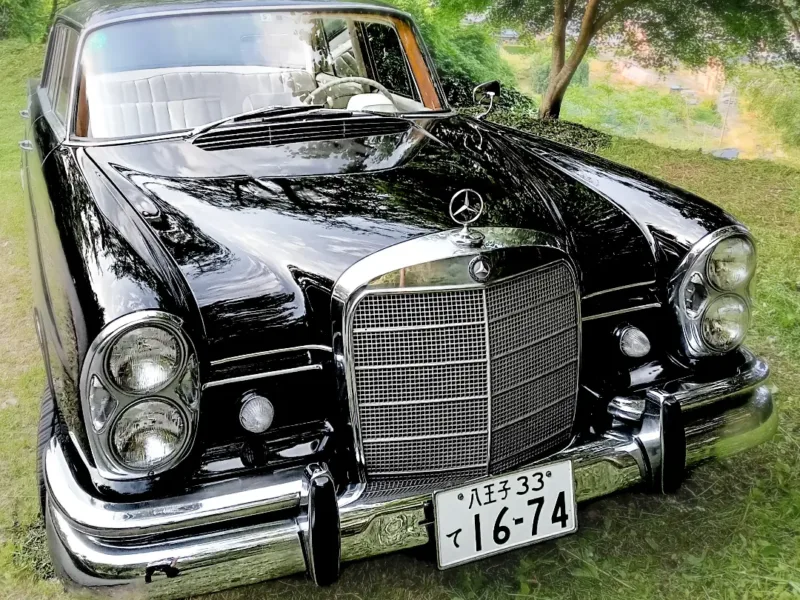
Black W111 Fintail – Mercedes-Benz 220S in Japan
🇯🇵 Damascus, Japan
Project Benz documents Mercedes 300 SL (W198) culture without softening it: the gullwing-doored coupe built on a tubular space frame, the open Roadster that followed it, the fuel-injected M198 straight-six that made it the fastest production car of its day, and the rare alloy-bodied cars chased by collectors. It is part owners' registry, part technical archive, with factory specs for both 300 SL bodies, restoration and provenance guides, paint codes, and originality detail, mapped to real cars in real collections worldwide. The cleanest Mercedes 300 SL builds and the reference to make sense of them, on one feed.
The 300 SL is the car that created the SL name. Launched as a coupe in 1954 on a lightweight tubular space frame, its deep sills forced the upward-opening gullwing doors it became known for. Mercedes built it for the road at the urging of its US importer, adapting the 1952 W194 racing car, and it sold faster than anyone expected.
Its M198 three-litre straight-six was the first production engine with mechanical direct fuel injection, good for around 215 PS and a top speed near 260 km/h depending on axle ratio. The open Roadster replaced the coupe in 1957 and ran to 1963. With 1,400 coupes and 1,858 roadsters built, the 300 SL sits among the most valuable post-war Mercedes.
The 300 SL is the original SL, built from 1954 to 1963. It started as the gullwing-doored coupe and continued as the open Roadster from 1957. Its fuel-injected straight-six made it the fastest production car of its day.
Mercedes built 1,400 Gullwing coupes between 1954 and 1957, including 29 with all-aluminium bodies, and 1,858 Roadsters between 1957 and 1963, for 3,258 cars in total.
It was the first production car with mechanical direct fuel injection, used a lightweight tubular space frame, and reached close to 260 km/h. The gullwing coupe, and especially the rare alloy cars, are now among the most valuable Mercedes ever sold.
Document your car, put it on the map, and help build the 300 SL section. Any state, stock to modified.