
Daily Driven2026W124
Bagged W124 from Kerala
🇮🇳 Kerala, India ·
Wheels make or break the look of a W201, and the 190E has a forgiving but specific set of fitment rules. Get the bolt pattern, bore and offset right and almost any clean wheel suits the car; get them wrong and you fight spacers and rubbing. This guide lists the factory specifications, the sizes owners run, and how offset and tyre choice decide whether a setup tucks or catches.
Every W201 shares the same core fitment specification, which makes wheel shopping simple once you know it. The bolt pattern is 5x112, the centre bore is 66.6 mm, and the wheels are held by ball-seat bolts rather than studs and nuts. Factory wheel sizes ran from 15 to 16 inches with offsets around the high ET40s to ET49, which is a fairly inboard offset by modern standards.
Offset (ET) is the distance from the wheel mounting face to its centreline, and on the 190E it is the number that matters most. A higher ET pulls the wheel inboard toward the strut; a lower ET pushes it out toward the arch. The factory ran high offsets, so the popular upgrade is a wheel with a lower ET that sits the face closer to flush with the arch. Go too low without arch work and the tyre catches; the fitment calculator shows where a given width and offset will sit before you buy.
Because the 5x112 pattern is shared with many later Mercedes and some VAG models, plenty of wheels bolt up. The bore is often larger on those, so hub-centric rings centre the wheel and stop vibration.
On a stock-height car, a 15 or 16 inch wheel in a sensible offset clears easily and keeps the ride supple. Lowered cars usually move to 16 or 17 inch with a lower offset for a flush look, with tyre size chosen to fill the arch without rubbing through the drop. Bagged and widebody cars run the most aggressive offsets and widths, leaning on arch clearance aired out and on the body for tyre cover. Period wheels suit the car too: the factory bundt and Penta designs and the classic BBS RS remain the reference look.
Whatever the height, set wheel, tyre and ride height together. A figure that clears at stock height can foul when lowered, so model the full setup before committing.
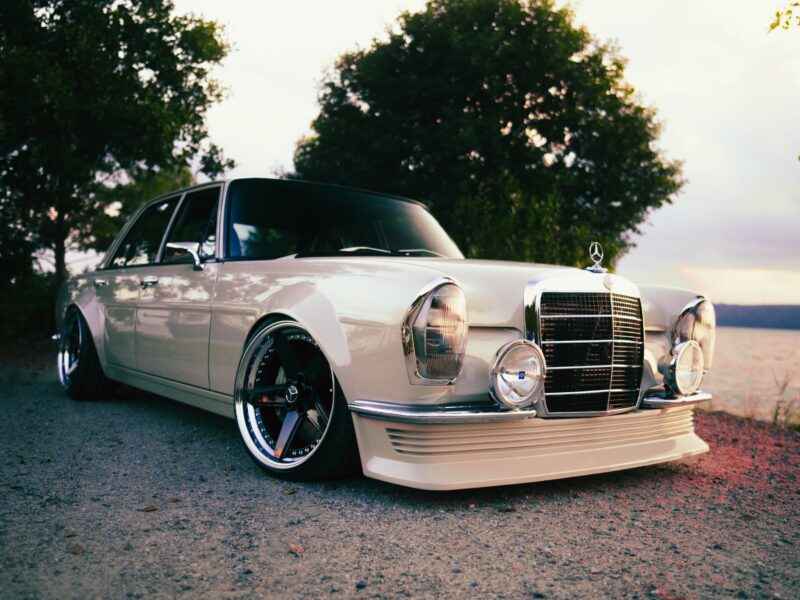
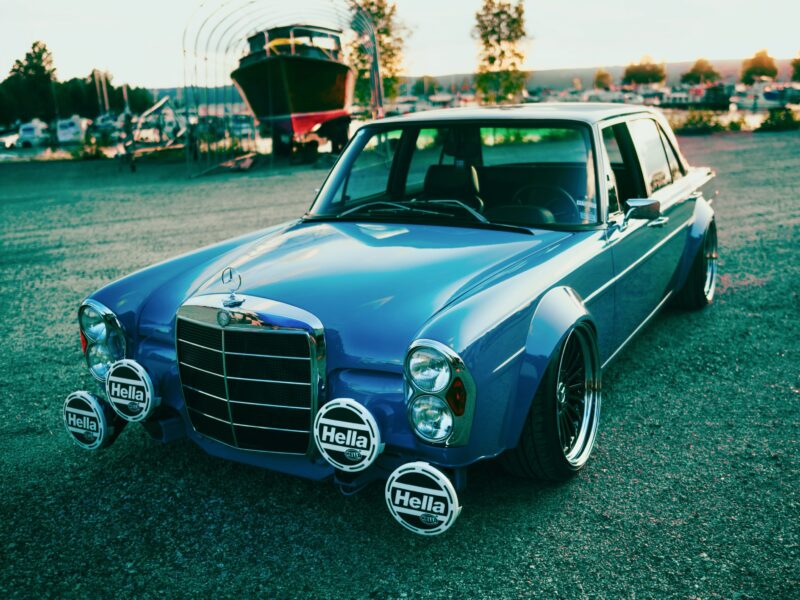
The W201 uses a 5x112 bolt pattern with a 66.6 mm centre bore and ball-seat M12x1.5 wheel bolts. This is shared with many later Mercedes models.
Yes, 17 inch is a common upgrade on lowered cars. Choose the offset and tyre size carefully so the wheel sits flush without rubbing at your ride height, and model it on the fitment calculator first.
The factory offsets are fairly high, so a lower ET than standard moves the wheel toward the arch for a flush look. The exact figure depends on wheel width and ride height, which is what the calculator works out.
Many 5x112 aftermarket wheels have a larger bore than 66.6 mm, so hub-centric rings are needed to centre them. Spacers are used to fine-tune offset, but choosing the right offset wheel is cleaner than stacking spacers.