
Concours / Show & Shine1983W201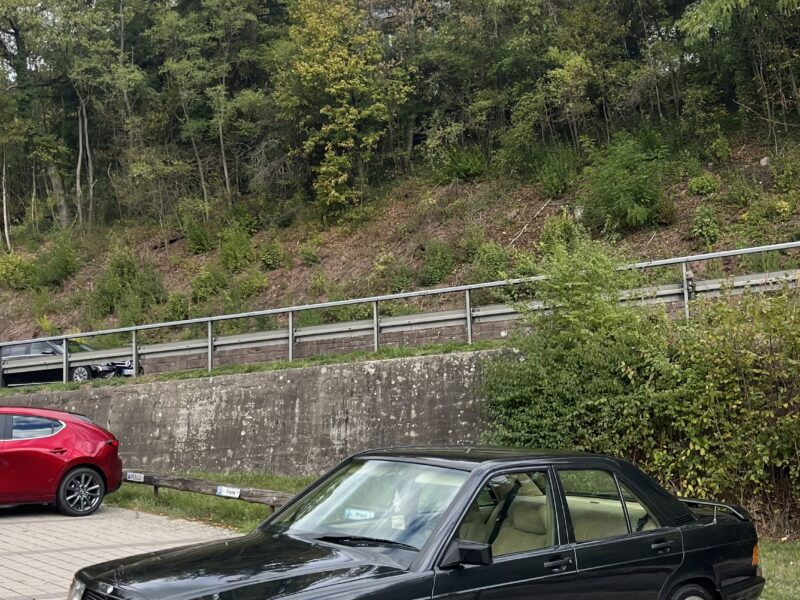
Zender
🇩🇪 Stuttgart, Germany · 190E 2.0
The Mercedes 190E carries air suspension better than most classic saloons. Its damper-strut front and five-link Raumlenker rear give a tuner clean mounting points and a wide drop, which is why bagged W201s have become one of the defining looks of the modern 190E scene. This guide covers what the conversion involves, the parts that fit, and what it costs in ride quality and reliability.
The front of the 190E uses a coil-over-damper strut with a lower control arm. Because the spring and damper sit in one assembly, the cleanest route is a bolt-in or fabricated air strut that drops in where the factory unit lived. The rear is the famous Raumlenker multilink, with the coil spring separate from the damper and seated on the lower link, so a rear air spring replaces the coil while the standard or an adjustable damper carries on doing its job.
That layout means a W201 can lay frame without the heavy chassis surgery some cars need. Most of the engineering effort goes into getting the struts right and the wheels to clear, not into cutting the floor.
There is no mass-market bolt-in kit for the W201 the way there is for a Golf or an E36, so most builds use either universal air struts sized to the 190E, adapted struts from a related Mercedes, or fabricated assemblies built around a quality bag and a rebuildable damper. Front bags carry the car and set the ride height; pair them with a damper valved for the lower stance so the car still settles rather than crashes.
At the rear, a bag-over or bag-on-link arrangement replaces the coil. The Raumlenker geometry gains camber as it drops, so very low rear setups need attention to bag clearance around the links and to the angle the bag works through. Get the mounts square and the rear will lay clean without fouling the arms.
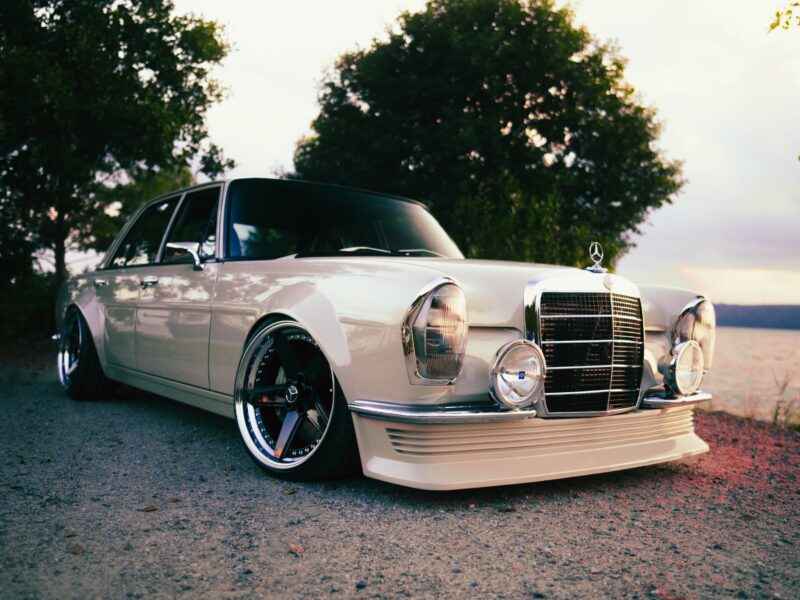
Wheel fitment decides how low a bagged 190E sits. Aired out, the arch swallows the tyre, so offset, tyre size and a little arch work matter more than the struts. Roll or pull the arches for an aggressive setup, and check the fitment calculator before buying wheels so you know the car will tuck rather than catch.
A W201 rarely needs frame notching. The bigger jobs are tidy bag mounts, a hard line install that looks factory, and bump stops set so the car cannot damage itself when it drops.
A well-valved air setup rides close to a good coilover at cruising height and far better than a slammed static car over broken roads. The trade is complexity: a compressor, a tank, lines and electronics are more to maintain than a spring. Buy a known bag and management brand, keep the air dry, and the system will live for years.
Budget for the struts, bags, management and wheels together, since they are one system. A quality digital build costs well over a coilover kit, and the labour is significant if you are not fabricating yourself. Done right it is reversible, which matters on a car whose clean examples are climbing in value.
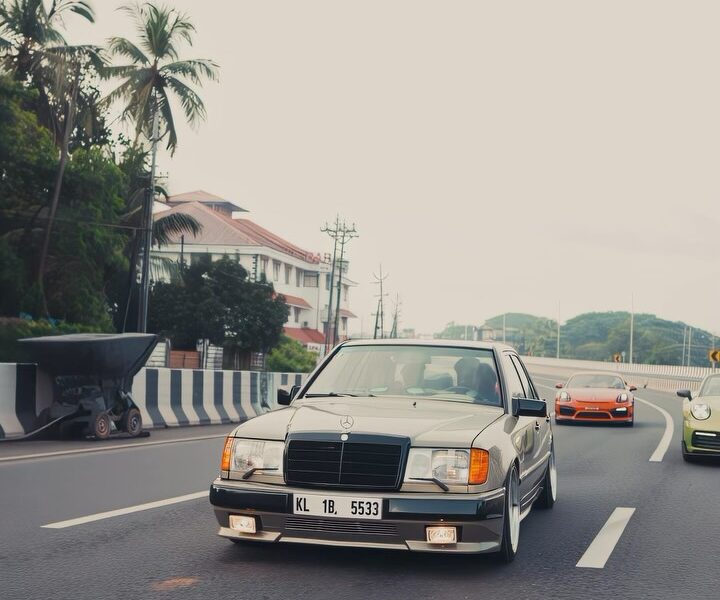
No. A well-valved air setup rides close to a good coilover at normal height and beats a slammed static car, because you raise the car for rough roads and speed bumps.
With the right wheel offset and light arch work, a W201 can lay frame or sit with the arch on the tyre. Wheel fitment, not the struts, usually decides the final height.
Yes, if the install is done without cutting structure. Bolt-in or fabricated struts and rear bags can be removed and the factory springs refitted, which protects the value of a clean car.
There is no large off-the-shelf full kit like the VAG market has. Most builds use universal or adapted struts and fabricated mounts, which is why a good fabricator and the right wheel choice matter so much.